
Long before Oculus or SteamVR, you could walk into an arcade in the early 1990s, step into a circular pod, put on a headset and fight pterodactyls in a virtual arena. The company behind those machines was Virtuality. This is its story.
A student project becomes a company
In the mid-1980s Jonathan Waldern was a PhD student working on virtual reality displays. His 'Roaming Caterpillar' prototype, a movable screen with shutter glasses and acoustic head tracking, appeared on the BBC's Tomorrow's World with presenter Maggie Philbin. In October 1987 he formed W Industries in Leicester with three partners: Al Humrich (software), Terry Rowley (mathematics) and Richard Holmes (engineering). According to a retrospective in Time Extension, the three partners each put in £2,500, with Waldern investing more and holding the majority.
The machines arrive (1990 to 1991)
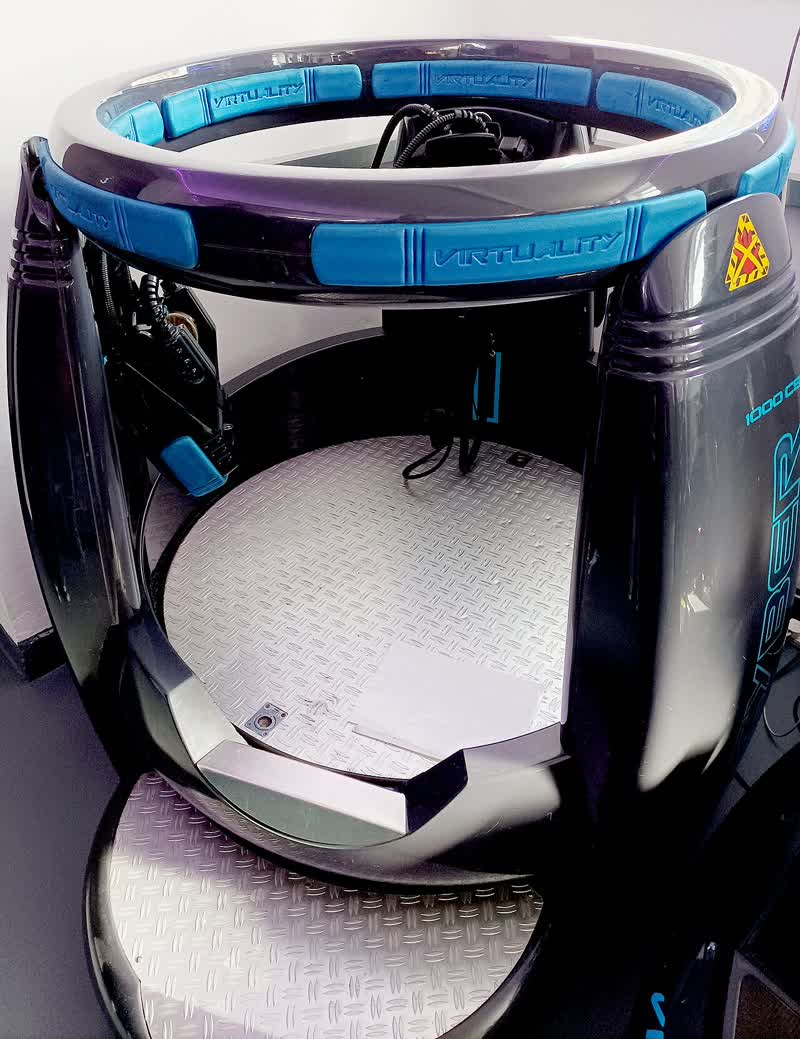
W Industries showed the Virtuality 1000SU at the Computer Graphics '90 trade fair in London in 1990, and its headset was nicknamed the Visette. The arcade versions followed: the stand-up 1000CS, the seated 1000SD, and a flagship game, Dactyl Nightmare. A Tomorrow's World segment in November 1990 went badly, with the pods apparently not running, so viewers saw footage that did not match the players' movements. In 1991 Apax Partners paid £2.4 million for a 67% stake.
How it made money
Players paid roughly £2 to £4 for about three minutes in the UK, and $3 to $5 for three to four minutes in the US. Pods sold for roughly £20,000 to £30,000 in the UK and around $60,000 to $65,000 in the US, though sources differ. Operators priced play high to cover the machine and an attendant's wages. Buyers included arcades, theme parks such as Thorpe Park, and corporate customers including Ford, IBM, Mitsubishi and Olin. Virtuality hardware also showed up on screen: see Virtuality on Screen.
Going public and big partners (1993 to 1995)
The company renamed itself Virtuality Group plc in September 1993. Its October 1993 share placing was at 170p, and shares nearly doubled on the first day, closing at 289p after a high of 315p. Even so, a contemporary report shows a 1993 pre-tax loss of £365,000 against a £217,000 profit the year before. Partnerships followed:
- Sega: a contract for the VR-1 attraction at Sega's Joypolis venues in Japan. The reported value differs by source. See Virtuality in Japan.
- Taito: Zone Hunter, the first 2000-series game.
- Atari: work on a Jaguar VR headset, shown at the January 1995 Consumer Electronics Show and cancelled after Atari's collapse.
The end of the original company
In July 1996 a delay to the game Total Recoil triggered a profit warning and shares dropped. On 11 February 1997 administrators from Arthur Andersen were appointed, citing a short-term cash shortfall. This is the UK insolvency process, so some accounts that say 'bankrupt' or 'Chapter 11' are imprecise. The entertainment rights passed to Cybermind. Arcadian Virtual Reality L.L.C. acquired Cybermind UK's VR business in 2004, and Wikipedia says the arcade assets went to VirtuosityTech in 2012. VirtuosityTech says the original shell moulds are lost, so no more pods can be built.
What survives
In 2016 Simon Marston of Leicester restored two 1000CS pods, believing them to be the only working ones. Leicester's Retro Computer Museum now runs four 1000-series units. In 2018 Bonhams sold two 1991 1000CS pods and seven Visette headsets. VirtuosityTech, which holds the intellectual property, has said it intends to bring the early VR library to modern platforms, with no release date announced.
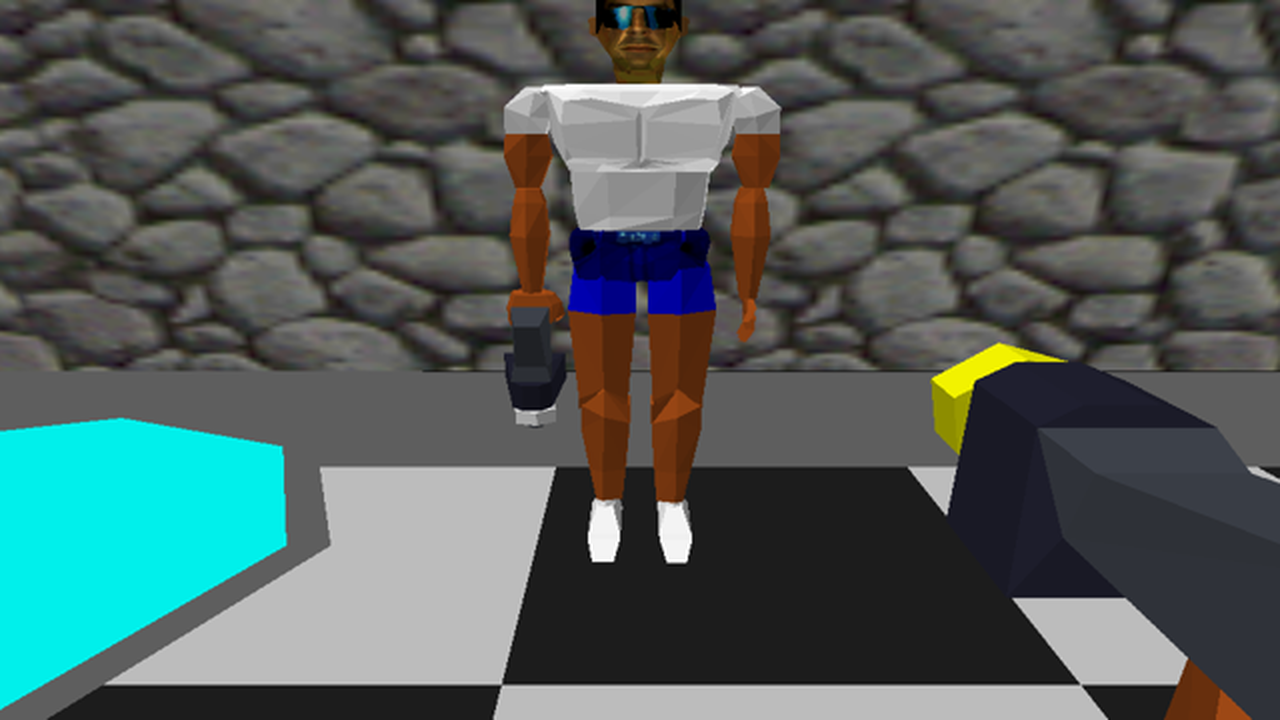
MallVR is an independent emulator project by Gainesphere Studios that runs Virtuality's 2000-series games on a modern PC. It is not affiliated with Virtuality or its current rights holders. See the MallVR page, and read about the hardware in Virtuality's Three Generations of Arcade VR Pods.
Sources differ on the founding year (1987 in most accounts), the float's total valuation, and the exact dates of some launches.
Sources
- Virtuality (product), Wikipedia
- Virtuality, VR&AR Wiki
- Virtuality, HCI Museum
- The making of Virtuality, Time Extension
- Virtuality's legacy in Leicester, Time Extension
- W Industries changes its name to Virtuality, Tech Monitor (1993)
- Virtuality makes share placing, Telecompaper
- Virtuality Group appoints administrators, Telecompaper (1997)
- The man keeping 1990s VR machines alive, Kotaku
- Official Virtuality '90s game ports could be landing on modern VR headsets, Road to VR