
Virtuality built its arcade VR machines in three generations. MallVR targets the middle one. Sources disagree on some figures, so where they conflict this article says so.
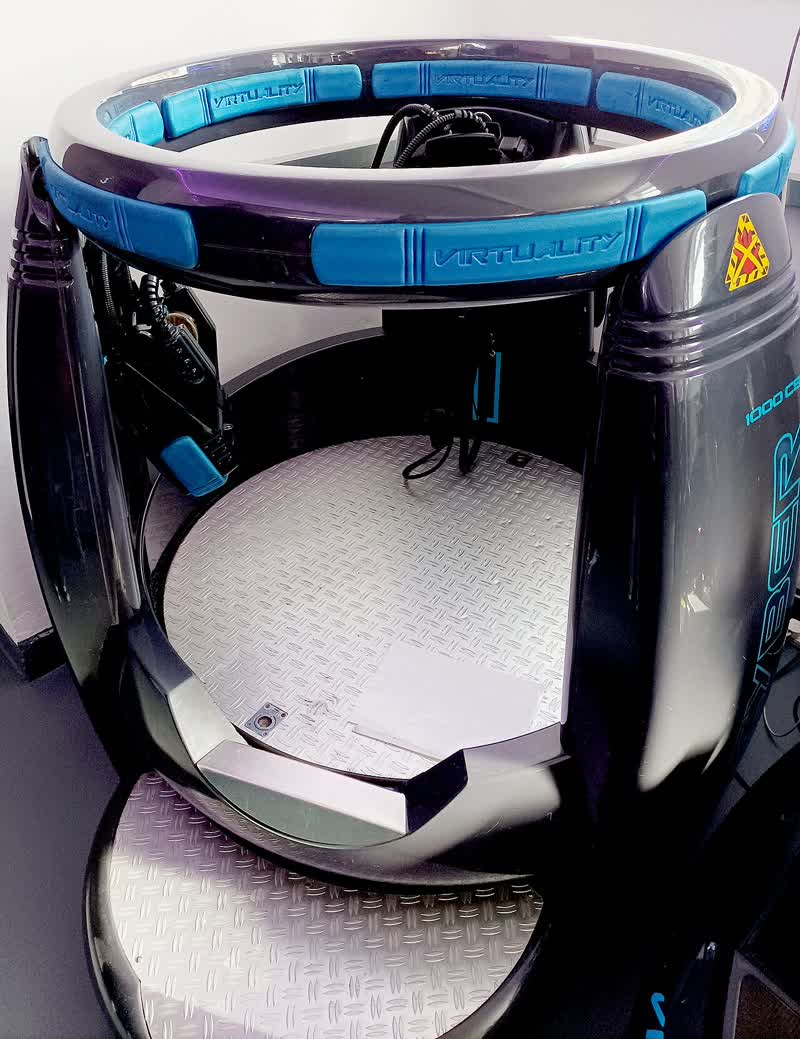
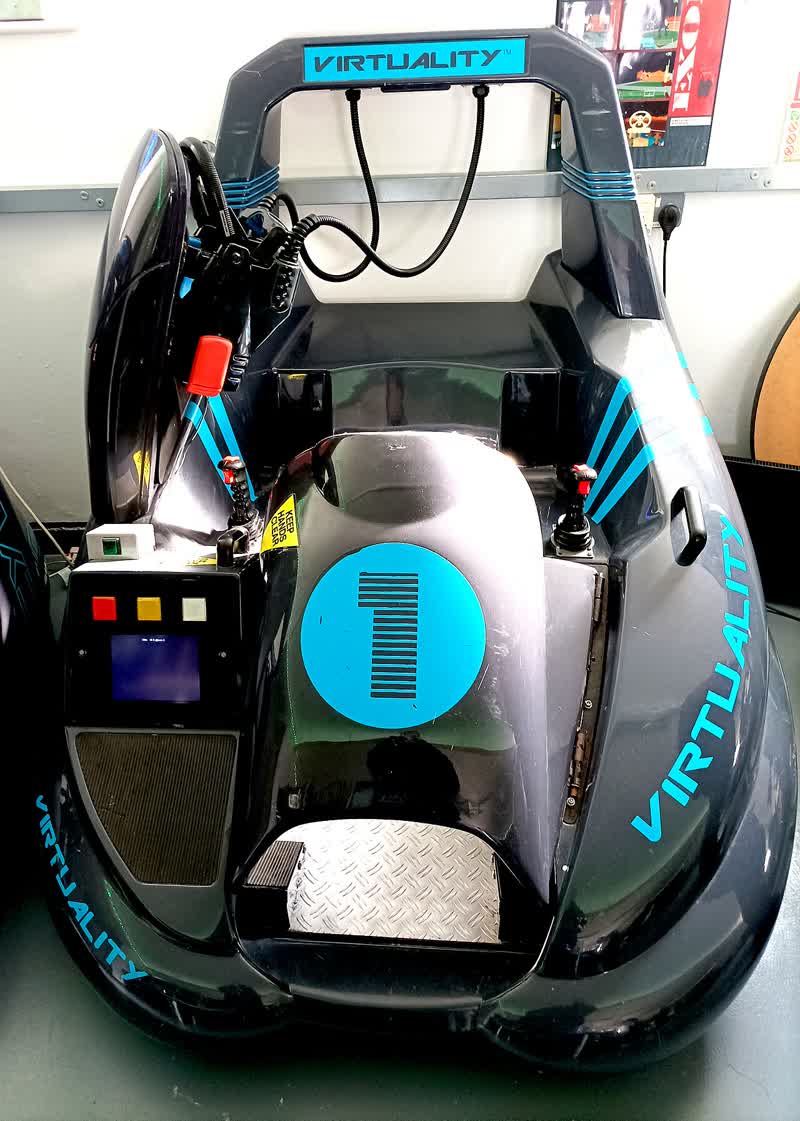
1000 series (1991)
- Computer: a Commodore Amiga 3000 with two graphics boards, one per eye.
- Headset (the Visette): its small LCD screens came from camcorder viewfinders and were too heavy to sit in front of the eyes, so they were mounted at the sides and reflected into the optics with mirrors.
- Tracking: the stand-up 1000CS used a Polhemus magnetic tracker, with the field source in the waist-high ring and receivers in the headset and a hand controller. The sit-down 1000SD used a cheaper, shorter-range Ascension tracker.
- Networking: up to four pods could be linked.
- Games: Dactyl Nightmare, Grid Busters, Hero and Legend Quest on the 1000CS; VTOL, Flying Aces, Battlesphere, Exorex and Total Destruction on the 1000SD.
2000 series (1994)
- Computer: a 486 PC, commonly described as running at 33 MHz (some sources say DX4), which booted into DOS and loaded the games from CD-ROM.
- Graphics: custom proprietary boards, which is why general-purpose emulators cannot run the games. Sources differ on exactly which chips were used, so none are named here.
- Headset (Visette 2): about 645 g with a field of view of roughly 60 degrees by 47 degrees per eye. Resolution figures vary by source.
- Cabinets: the stand-up SU2000 and the sit-down SD2000, which used the same electronics with a seat, an 8-way joystick and a throttle.
- Networking: up to eight units could link locally, with a networked microphone system for player chat.
- Price: sources do not agree, with figures from about $33,000 per seat to about $100,000 per system.
- Deployment: US malls, corporate buyers, and the film Hackers (1995), which features a real SU2000.
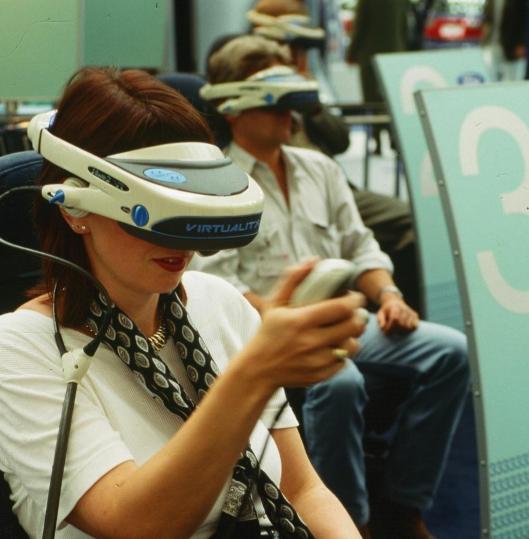
This is the generation MallVR runs. Games included Dactyl Nightmare 2, Buggy Ball, Zone Hunter, Pac-Man VR, Shoot For Loot, Missile Command, Ghost Train, Virtuality Boxing, Sphere, X-Treme Strike and the Japanese-language Sea Diving.
3000 series (about 1996 to 1997)
A Pentium-based version of the 2000-series pod with a rifle-style controller. A version sold as Total Recoil used a replica Winchester over-under shotgun with CO2 recoil. Games included Zero Hour, Quick Shot Carnival and Pac-Man VR, the only non-shooter on the SU3000. The number of machines built is not documented anywhere we could find, and some collectors say Total Recoil actually ran on a late 2000-series configuration. MallVR does not run SU3000 games yet.
Keeping them alive today
Collectors report broken joystick wires, missing CDs and hard drives, and magnetic tracking disturbed by nearby steel. The pods weigh hundreds of pounds. The Computerspielemuseum in Berlin and the Embracer Games Archive in Sweden have working or displayable units, and Leicester's Retro Computer Museum runs four 1000-series pods.
Read the full story in What Was Virtuality? and see the games in the game guide.
Sources
- Virtuality (product), Wikipedia
- Virtuality, HCI Museum
- Virtuality entertainment specs, virtuality.com
- Virtuality SU2000, SkullSpace wiki
- The man keeping 1990s VR machines alive, Kotaku
- Virtual reality in the 90s, heise
MallVR is independent software from Gainesphere Studios and is not affiliated with Virtuality or its rights holders.